
Experts say companies wanting to launch IPOs will have to scale back their expectations given the fall in valuations.
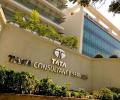
Tata Sons has pocketed Rs 11,164 crore by tendering 24.81 million shares in the Rs 18,000-crore share repurchase programme by the group's flagship firm Tata Consultancy Services (TCS). State-owned insurer Life Insurance Corporation (LIC) tendered 1.17 million shares to take home Rs 528 crore. Small shareholders - those holding shares worth up to Rs 2 lakh - tendered 25.3 million shares in the buyback, 4.22 times the 6 million shares reserved for them in the buyback.

After selling dollars for the past few months, the Reserve Bank of India (RBI) may take a hands-off approach before its annual account closing by not trying to prop up the rupee as geopolitical tensions show signs of stabilising with global crude oil prices easing from its $140 peak. The central bank was a net buyer of dollars between April and September, and then turned a net seller in the following months, the data released by the RBI showed. The RBI continued to be a net buyer of $36.6 billion in this fiscal year - between April and January. In 2020-21, it purchased $68 billion on a net basis.

With the banking regulator lifting restrictions on HDFC Bank's digital initiatives, the largest private sector lender is now girding up to launch a clutch of customer-facing applications (apps), which will act as stepping stones in its journey to morph into a technology (tech)-led bank from a conventional one. Following repeated outages in its digital offerings, the Reserve Bank of India (RBI) had barred HDFC Bank from issuing new credit cards in December 2020 and prevented it from going ahead with its digital launches. The embargo on issuing credit cards was lifted in August 2021 and the ban on digital launches was lifted last week.

'We now understand things that we have to correct.'

Once stability returns to the secondary market, companies that have obtained approval from Sebi will start tapping the market.


As stringent sanctions imposed by the European Union and US are crippling business and trade, desperate Russian oil companies are offering huge discounts to India, provided a payment mechanism to bypass the SWIFT ban is quickly approved by the government. According to sources familiar with the development, Russian oil firms are offering 25-27 per cent discount to the dated Brent crude prices. State-run Rosneft is one the biggest oil companies that supply crude to India.

The Securities and Exchange Board of India (Sebi) has cleared the draft red herring prospectus (DRHP) of the state-owned Life Insurance Corporation of India (LIC). According to investment banking sources, the so-called final observations were issued by the market regulator on Tuesday evening. Following the market regulator's nod to the IPO papers, the insurer can launch its share sale. However, LIC may not launch its IPO immediately given the current volatile market conditions.
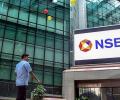
The National Stock Exchange (NSE), which is once again in the eye of a storm due to the co-location scandal, has said it has taken several transformational steps in the past few years on the regulatory, technological, and surveillance fronts to help improve stakeholder experience and to protect investors. Senior officials of the exchange briefed the media over the steps the exchange has taken on various fronts following changes at the helm with former managing director and chief executive officer Chitra Ramkrishna's ouster in December 2016. "Over the last few years, we have been looking to modernise and transform the entire value chain of technology.

The mysterious Himalayan 'yogi' who allegedly advised Chitra Ramkrishna, former managing director and chief executive officer of the National Stock Exchange (NSE), on important matters of the bourse could be none other than Anand Subramanian, according to a letter written by former NSE chairman Ashok Chawla to the Securities and Exchange Board of India (Sebi). Subramanian was group operating officer of the NSE and advisor to Ramkrishna during 2015-16. He joined as chief strategic advisor in April 2013.

The National Stock Exchange (NSE) has got into firefighting mode to control the reputational damage caused by the Securities and Exchange Board of India's (Sebi's) order against its former managing director and chief executive officer Chitra Ramkrishna and others. According to sources, the exchange's management over the past one week has met several key stakeholders, including officials in the finance ministry and Sebi, major shareholders, and trading members, trying to distance itself from the controversy. The exchange plans to hold more meetings in the coming week to ensure that trading volumes and confidence in the bourse don't get impacted, they added.
Life Insurance Corp of India (LIC), which is aiming to launch its initial public offering (IPO) next month, is set to alter the pecking order of top listed companies in the country. Depending upon where the government prices the IPO, the stock could end up becoming India's most valuable company on the first day and even get fast-tracked into global benchmark indices given its sheer size. According to market sources, LIC's IPO is targeting to mop up Rs 63,000 crore and Rs 75,000 crore.

The Reserve Bank of India (RBI) has announced a dollar-rupee two-year sell-buy swap auction for $5 billion on March 8, which will suck out rupee liquidity from the system. The swap will be in the nature of a simple sell/buy foreign exchange from the RBI side, in which a bank will buy US dollars from the central bank and simultaneously agree to sell the same amount of US dollars at the end of the swap period. "With a view to elongating the maturity profile of its forward book and smoothen the receivables relating to forward assets, it has been decided to undertake sell/buy swap auction of $5 billion on March 8, 2022," the RBI said in a statement. The auction cut-off will be based on the premium amount in paisa terms up to two decimal points.


Former NSE managing director (MD) and chief executive officer (CEO) Chitra Ramkrishna and group operating officer and her advisor Anand Subramanian ran a 'money-making scheme' during their stint at the National Stock Exchange (NSE), markets regulator Securities and Exchange Board of India (Sebi) has alleged. The order passed by Sebi dated February 11 highlights frequent increase in the compensation package of without proper appraisal, documentation or file notings, and the involvement of the human resource (HR) head or the nomination and remuneration committee. Furthermore, the order talks about Subramanian being directed to "withdraw and surrender" to the unknown person a gross amount per month as "gratitude".
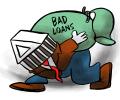
Commercial banks in the country continued with their improving asset quality trend in the October-December 2021 quarter with slippages remaining under control coupled with healthy recoveries and upgradation of asset classification. The 28-listed banks reported improvement in bottom line with net profits rising 64.1 per cent year-on-year (YoY) and 21.5 per cent sequentially. This is mostly on account of a fall in provisions and contingencies.

'India has many attractive features for the long-term investor; it combines: A low per capita income, a young population, and a heavier presence of high margin, asset-light firms in the technology sector.'

The total amount of fraud reported by banks showed a drop in 2020-21 - for the first time in eight years - though there is an emerging trend of private sector banks reporting a larger number of frauds related to card and internet banking. According to the latest data released by the Reserve Bank of India, commercial banks reported Rs 1.38 trillion of frauds in 2020-21, as compared to Rs 1.85 trillion in the previous year. The first half of the current fiscal year saw banks reporting frauds worth Rs 36,342 crore.

Will 2022 be a year of contrasting narratives -- one filled with caution and the other with continued optimism?
